 SaisonPersonal project · 2026
Understanding a player at a glance
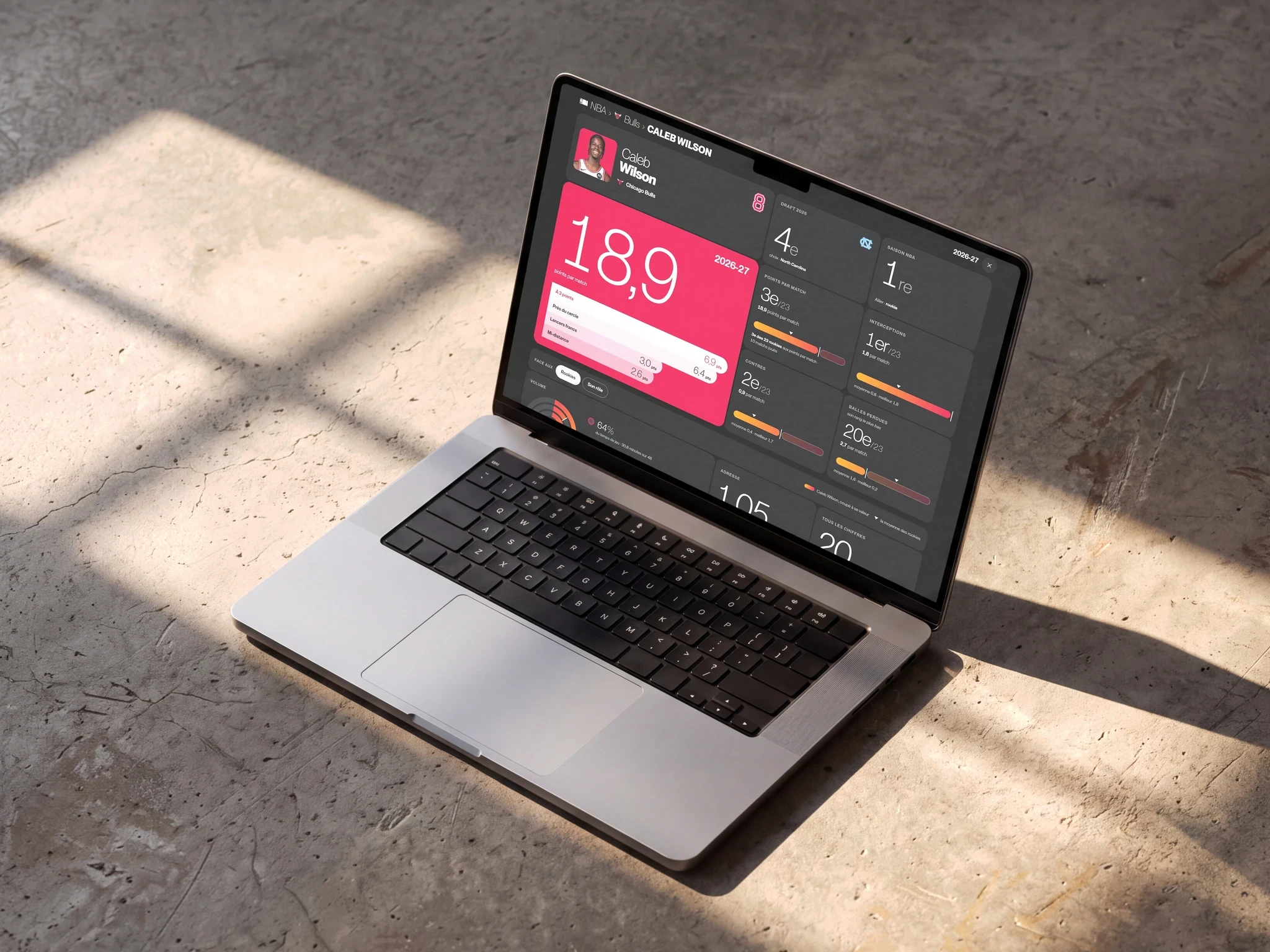
An NBA player profile where every number has its reference point, for fans who don’t speak analyst jargon.
- Role
- product design, data design, development lead
- My part
- One page that states facts, never verdicts
- Outcome
- 298 players, one profile each, 5 questions per player
- Team
- solo, developed with Claude Code
- Deliverable
- NBA player profile, player directory, phone and desktop
- Setting
- personal project, unofficial concept, public data, interface in French
Context
How do you show whether a player makes his team better, without jargon, and without judging on the reader’s behalf?
The number everyone looks at
An NBA fan follows the season through highlights and social media. When a rookie is all over the news, they want to know if the hype is deserved. The numbers to answer exist, but they speak to analysts: net rating, on/off, TS%. And points, the one number everyone reads, often tell the wrong story.
Saison started as a football site: five leagues, the European cups, then the NBA, 2,775 players tracked. A lot of pages for a single question. On 10 November 2026, I refocused everything on the NBA and on one page: a player’s profile.
- Always say “compared with what”: rookies, his role, or himself last season
- The popular number first, points, then what it hides
- One big number, one short sentence, no acronyms
- No information carried by colour alone
- An unofficial concept, password-protected and not indexed, because it shows real logos
Exploration
The first profile gave every player a verdict; the last one only states facts
Three directions in ten days
Tried for real, on the same player
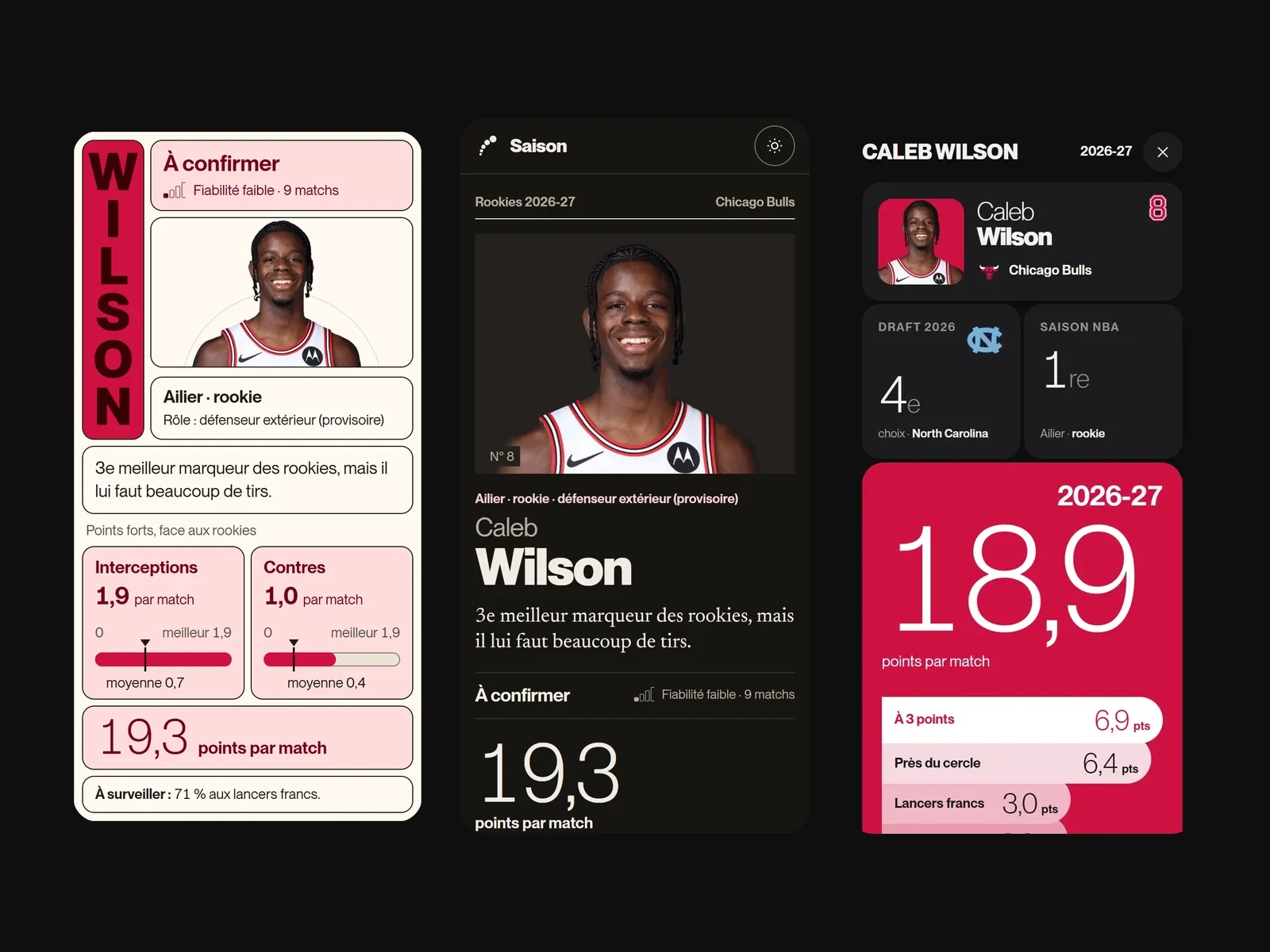 The card, the magazine, then SaisonA collectible card, a magazine page, then the site’s original style.
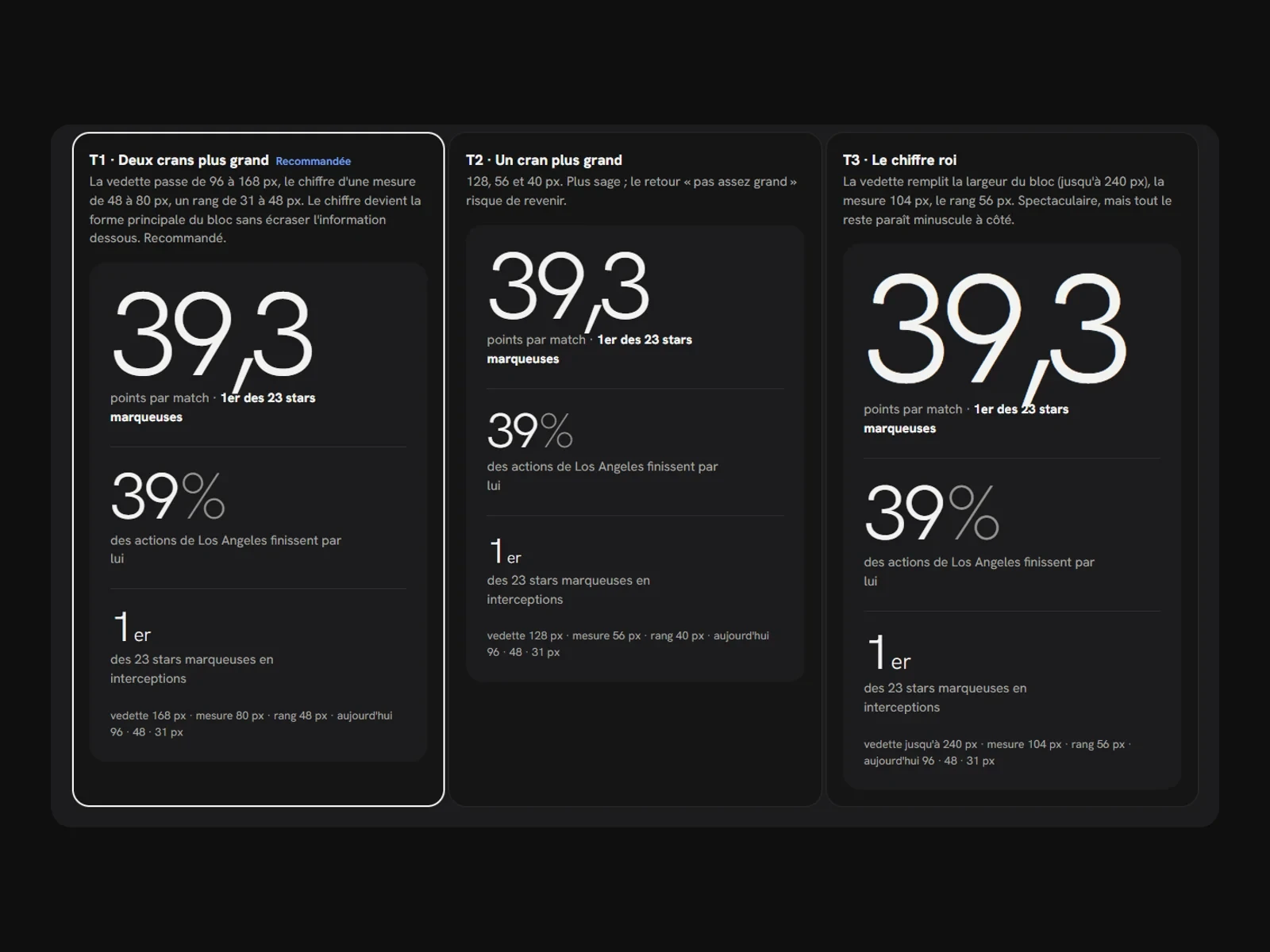 Every choice on a boardTwo or three options with real data, side by side, then a decision.
- A collectible cardFront and back, like a trading card: an identity so strong it upstaged the numbers.Dropped
- A magazine pageA calm editorial look with a reading typeface: elegant, but the profile lost its feel of a tool.Dropped
- Saison’s original styleBlocks set almost edge to edge, one idea each: the system built for football, reused for basketball.Kept
- A verdict on every player“Solid”, “To be confirmed”, “Fading”: 124 players out of 298 ended up “Fading”. Removed: the profile states facts, the reader judges.Dropped
- A flower to sum up a profileReplaced by a radar where the closest player sits as an outline, on the same scale.Dropped
- A fan shape for the rangeReplaced by an arc of twenty segments: the range can be counted, and a line marks the gap.Dropped
- A slider to compare two playersNothing showed where to grab it. The other player became a marker on every bar.Dropped
- The rank printed like a jersey numberIt got mixed up with the player’s own number.Dropped
- The shapes from the football siteFourteen shapes reviewed with NBA data: four kept, including the playing-time rings and the four-corner chart.Kept
Design
Each chapter answers a fan’s question, with one big number and its reference point
Five questions, one profile
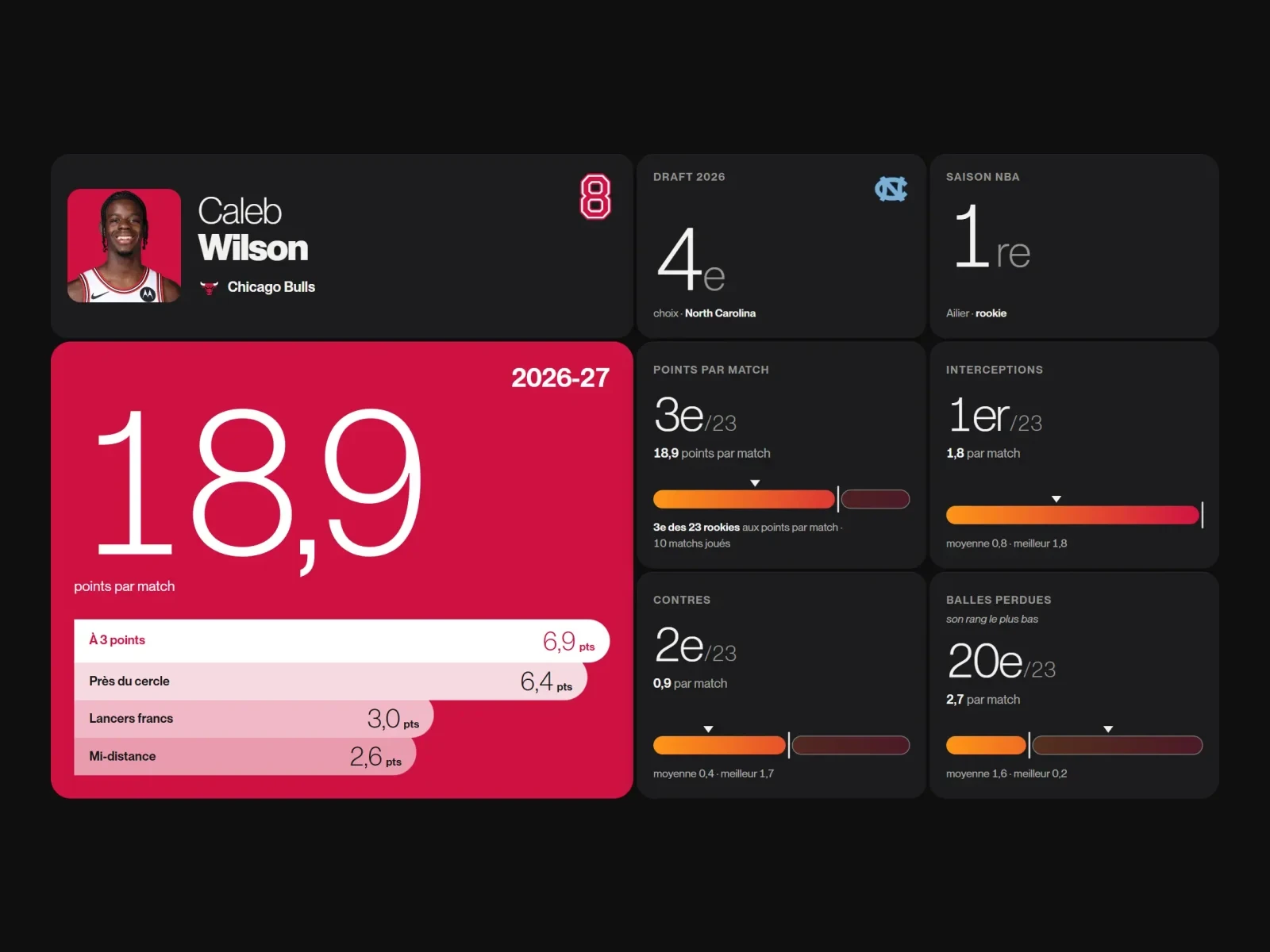
A fan’s question, a readable answer
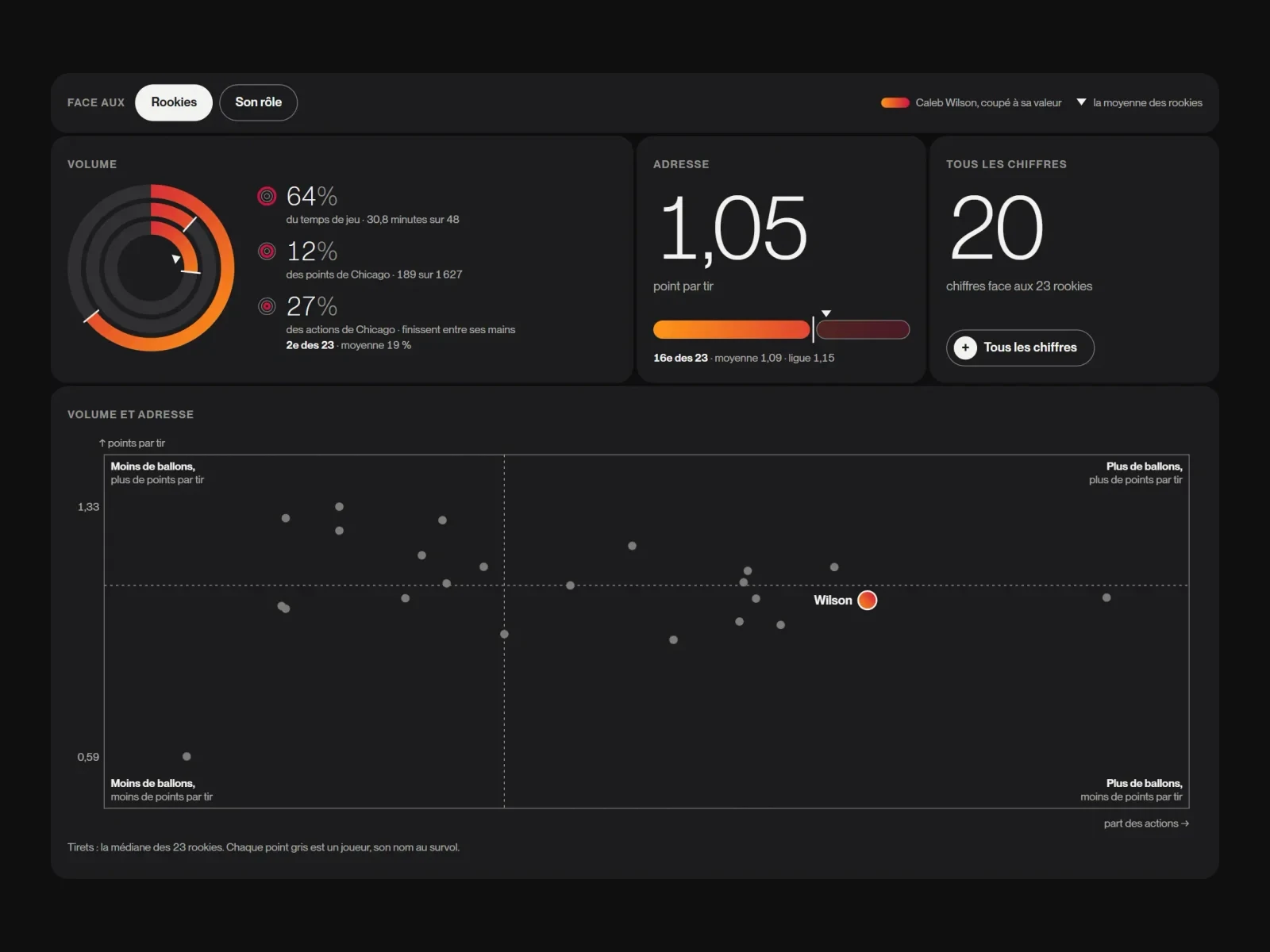 Volume and efficiencyHow many possessions go through him, what he does with them, and where he stands among rookies.
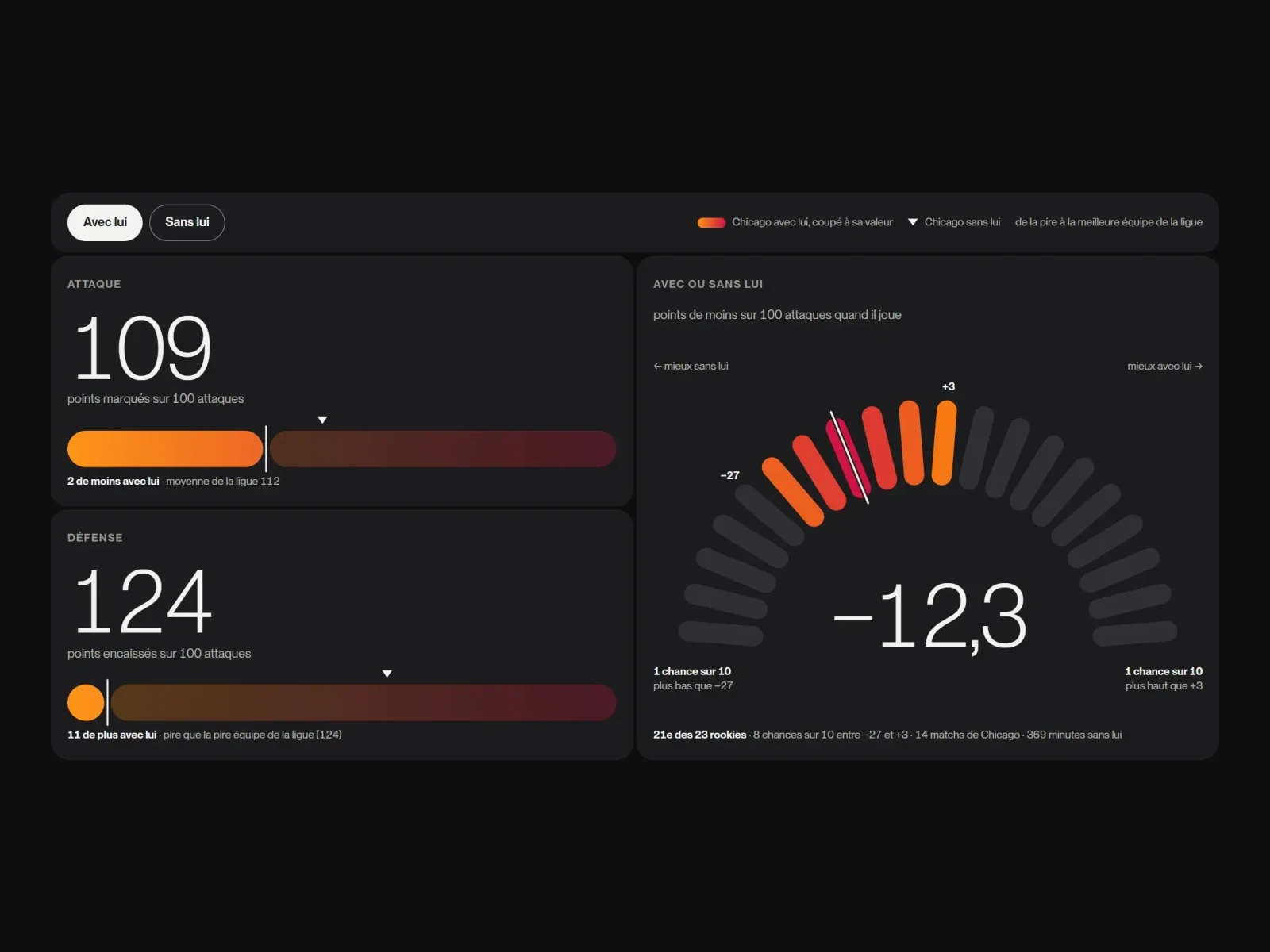 Does he make his team better?The team with and without him, and the range in twenty segments: the uncertainty is visible.
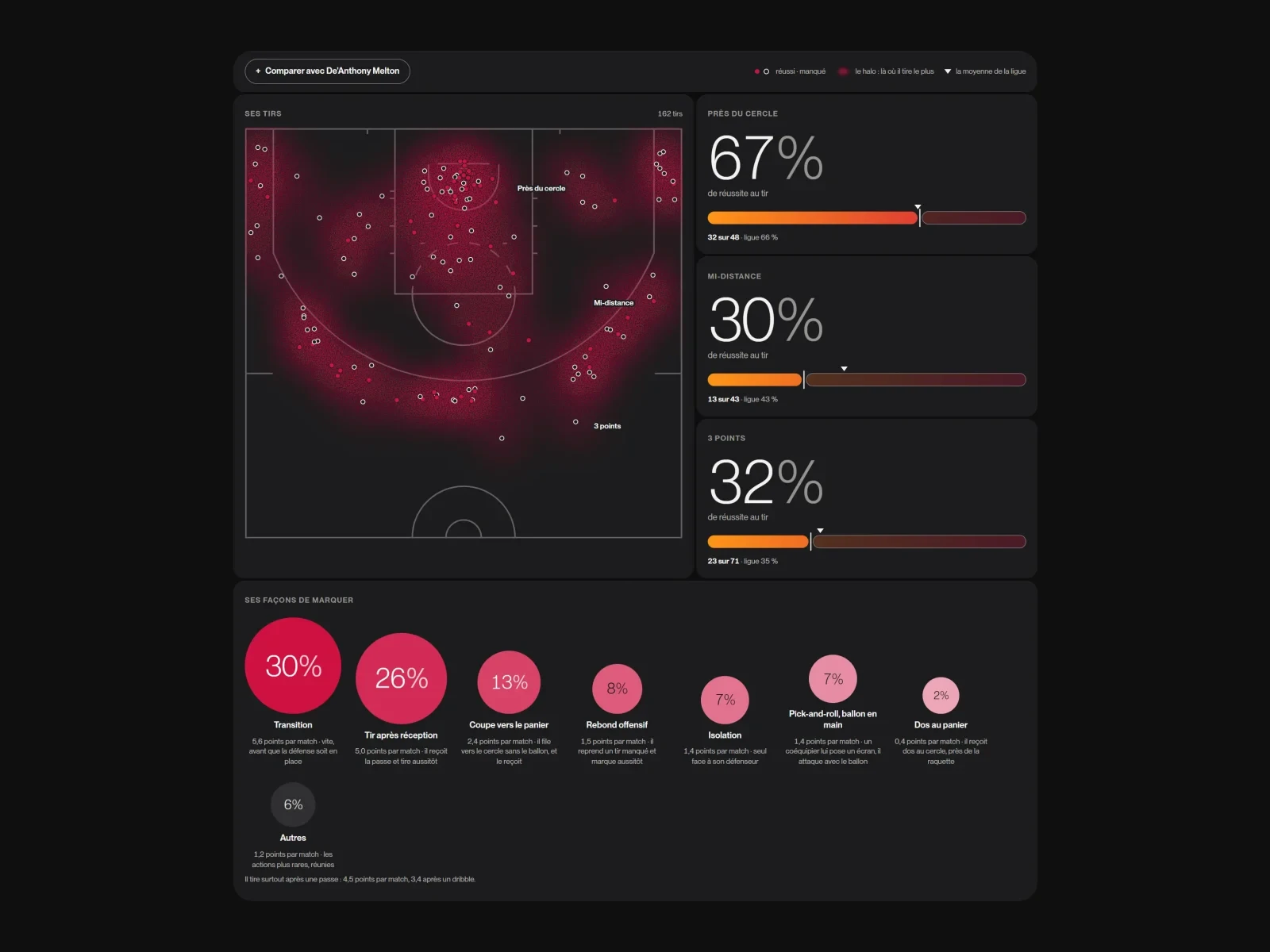 How he scoresHis shots one by one on a real court, with a glow where he shoots most.
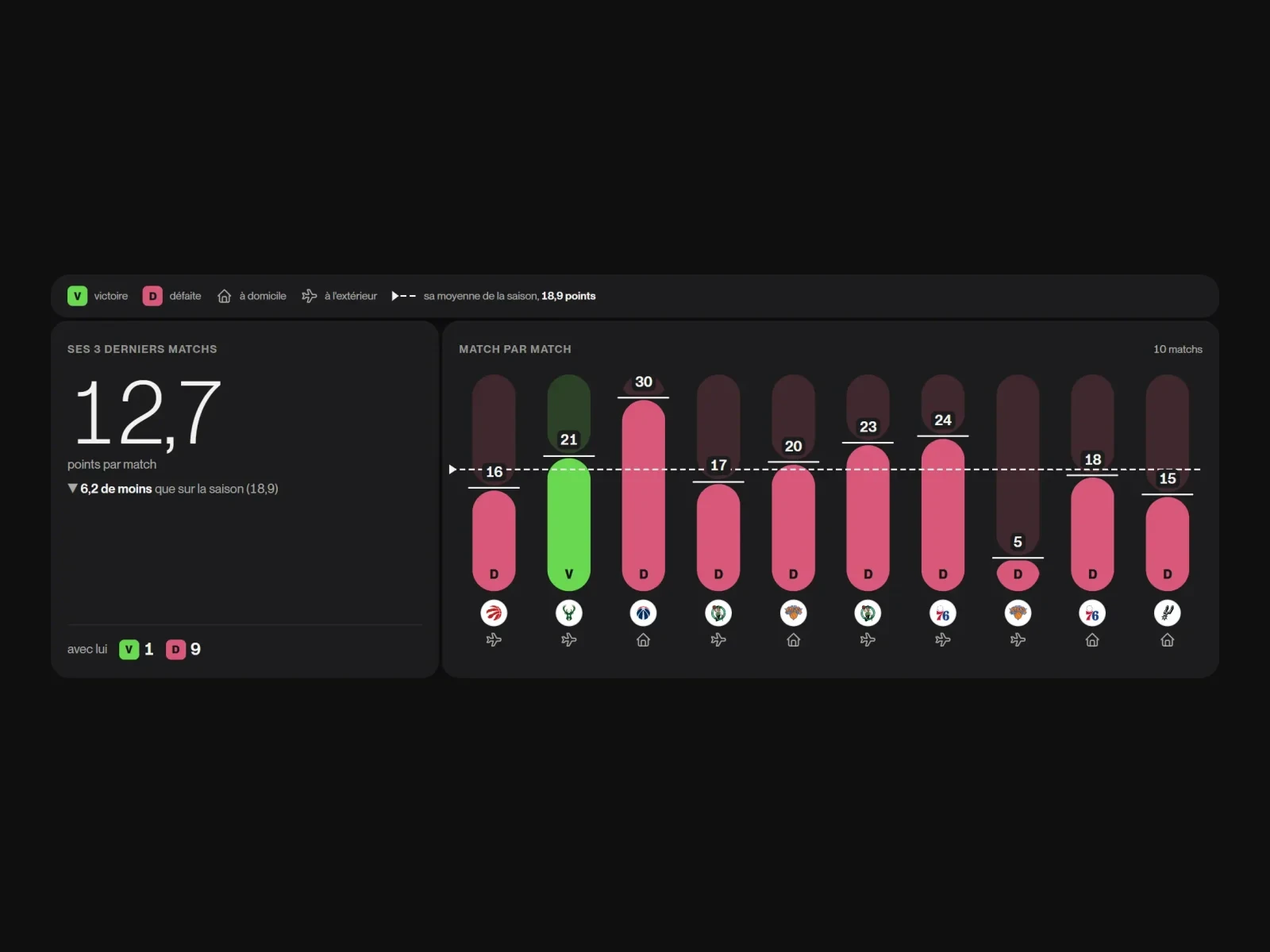 Is he in form?One bar per game, with the win or loss always spelled out.
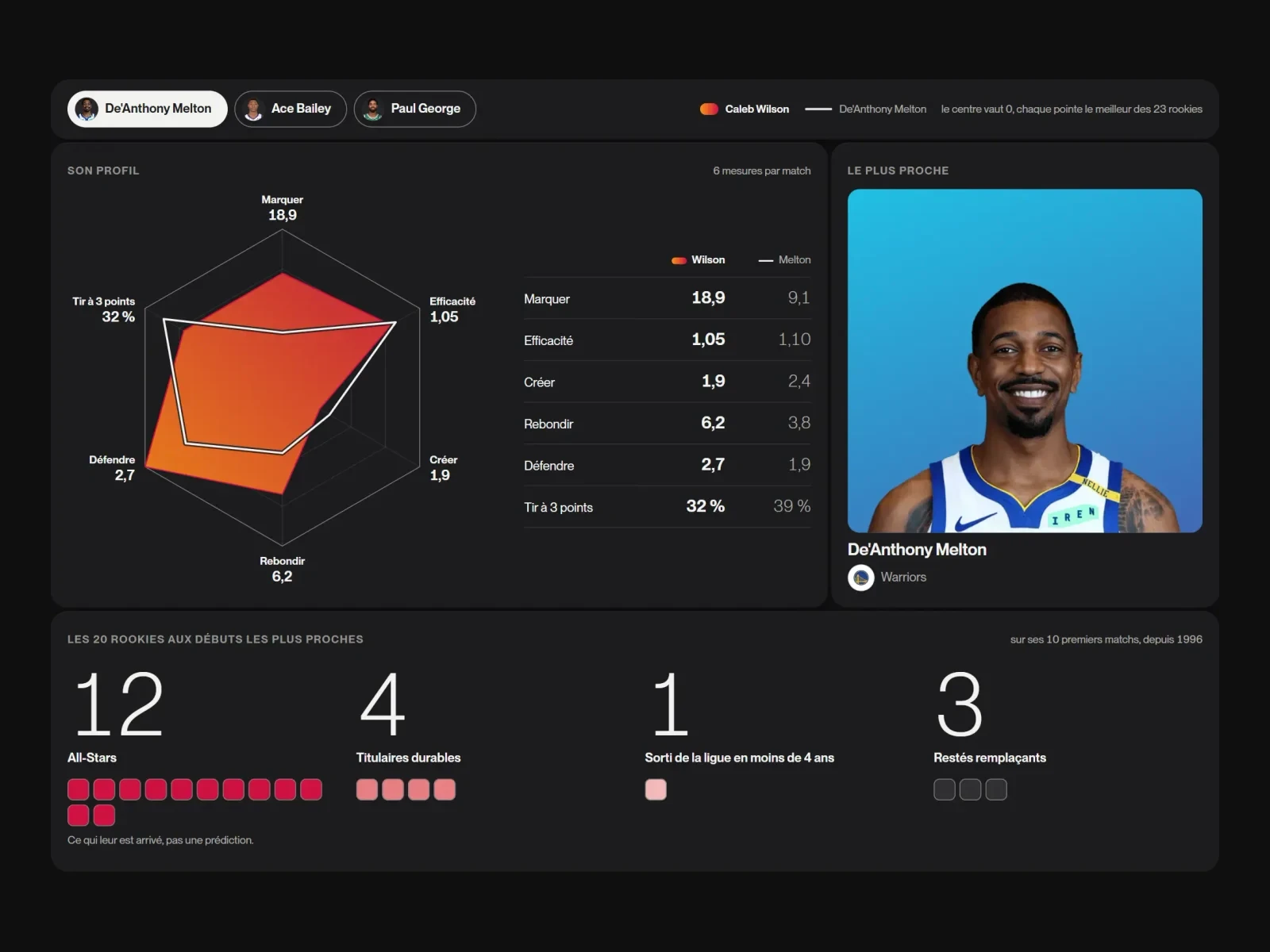 Who is he like?His profile and the closest player’s, on the same scale.
A home page whose only job is to lead there
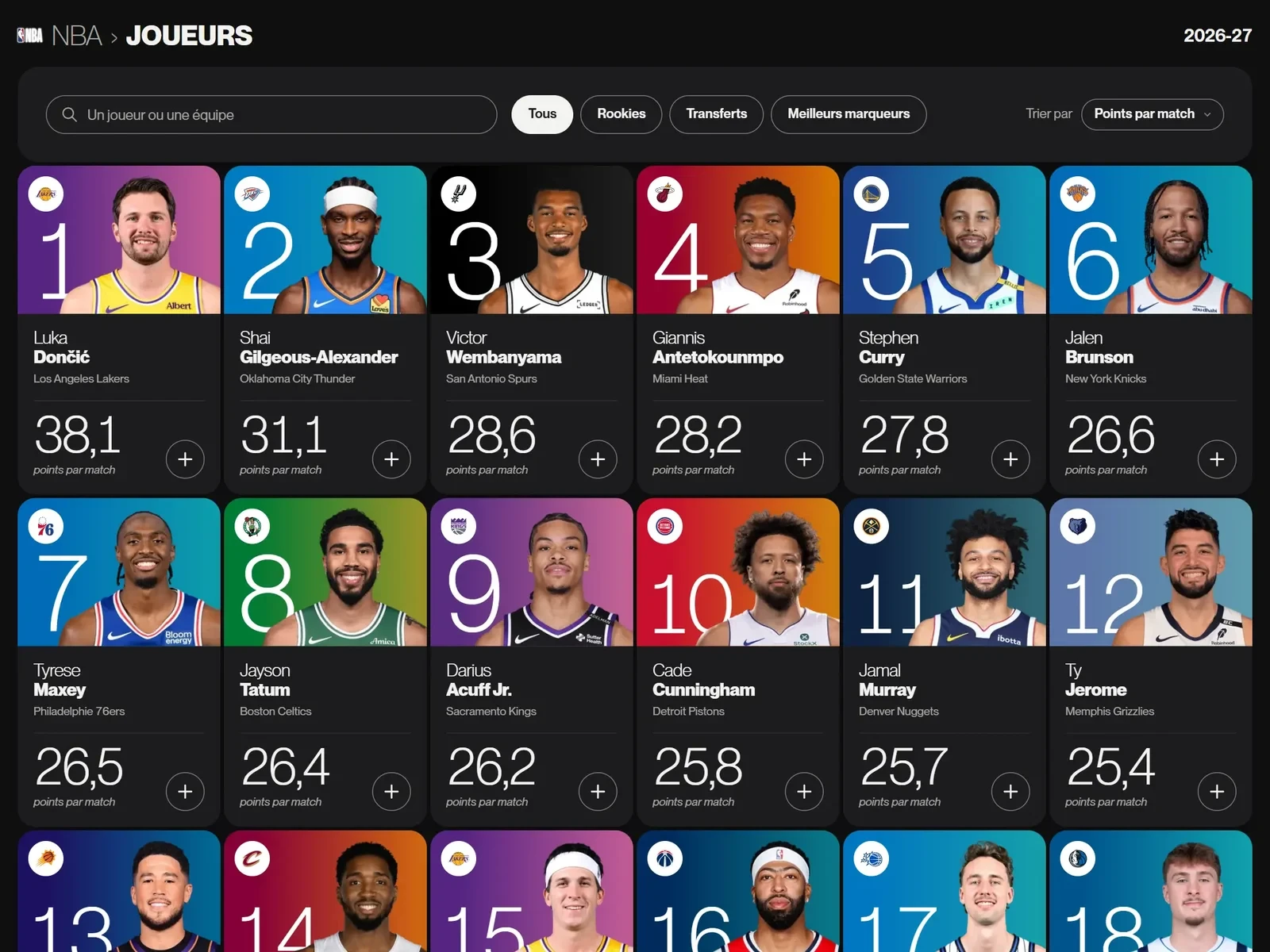 The playersEach player’s rank in very large type behind him, on his team’s colour.
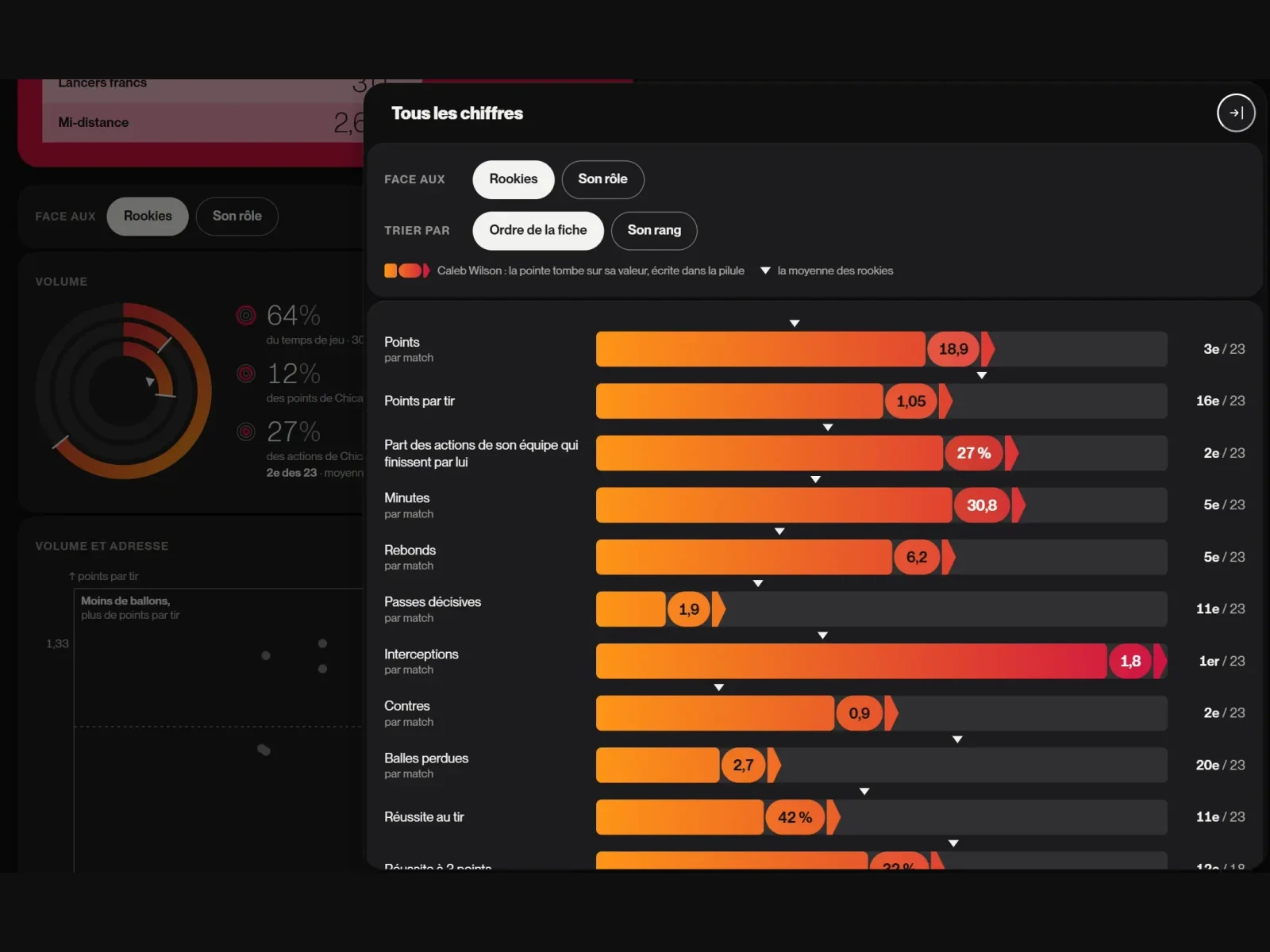 All the numbersTwenty numbers against the chosen group, in a sliding panel.
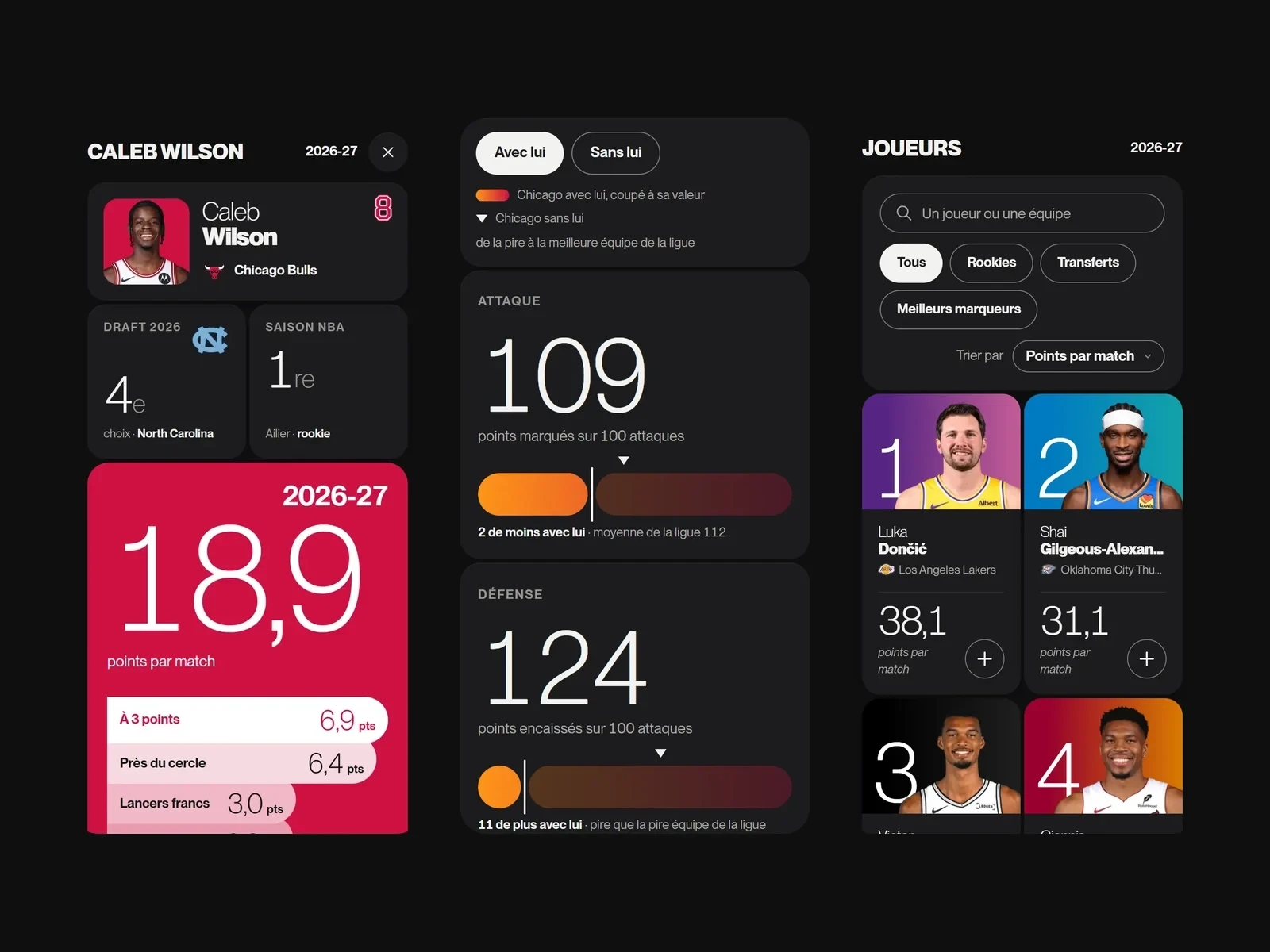 On a phoneThe same blocks, one under the other: the profile was designed for phones first.
- 5QuestionsVolume and efficiency, the team with and without him, his shots, his form, the players who resemble him
- 20Numbers per playerEach against his group (rookies or his role), or against his own last season
- 30Team coloursEach one checked for contrast, in light and dark mode
- 17Decision boardsFrom 17 to 20 November 2026, each decided before it was built
Tests
Feedback on one player applies to all 298
Three reviews, screen by screen
Saison hasn’t been tested by other fans yet: every screen was checked by measurement, then by eye.
- All 298 profiles opened one by one, for every group, on phone and desktop: no missing number, nothing overflowing
- An accessibility audit of the profile, the panel and the home page, in light and dark mode
- The colours of all 30 teams, including the lightest
- Wins and losses readable for someone who confuses red and green, with the letter always written
- Keyboard: Escape closes the panel and focus returns to the button
- The “reduce motion” setting, respected everywhere
- An off-centre rangeDončić’s went from +29 to +69 for a gap of +31: a missed game didn’t count as “without him”. Recalculated, it now runs from +17 to +50.
- An empty barWhen a team did worse than the league’s worst, its bar vanished: it now keeps a minimum, and the sentence says so.
- Empty space around the courtOn large screens, the half court left a gap in its block: it now runs to the halfway line and sits at the top.
- Every view reviewedIn the third round, 22 views on phone, tablet and desktop, in light and dark mode: 132 screenshots.
Retrospective
Removing the verdict made the profile fairer
Fewer pages, more reading
- 11DaysFrom 10 to 20 November 2026, from the new brief to the complete profile
- 298PlayersEveryone playing regularly in 2026-27, one profile each
- 1PageInstead of a site covering ten competitions
I should have written “state facts, don’t judge” into the brief
The first brief asked for a verdict on every player. It took two reviews to see that it was judging on the reader’s behalf. Set from the start, this rule would have saved me from building, then removing, verdicts, sentences and labels.
- A test with NBA fans, on a phone, the day after a game
- Profiles updated every morning
- Going live, after that test
Designed and directed by Martial Deleplanque, developed with Claude Code. Data: stats.nba.com. Player portraits and team logos: NBA.com; college logos: ESPN. Court based on “Basketball - NBA - field diagram” by snater.com, Wikimedia Commons (CC BY-SA 4.0), modified. Typefaces: PP Neue Montreal (Pangram Pangram), Graduate (SIL OFL). Names, logos and portraits belong to their owners: an unofficial concept, not affiliated with the NBA or its teams.
Contact
martial-deleplanque@hotmail.fr