 BlaBlaCarBootcamp project · 2026
Finding each other, already a journey
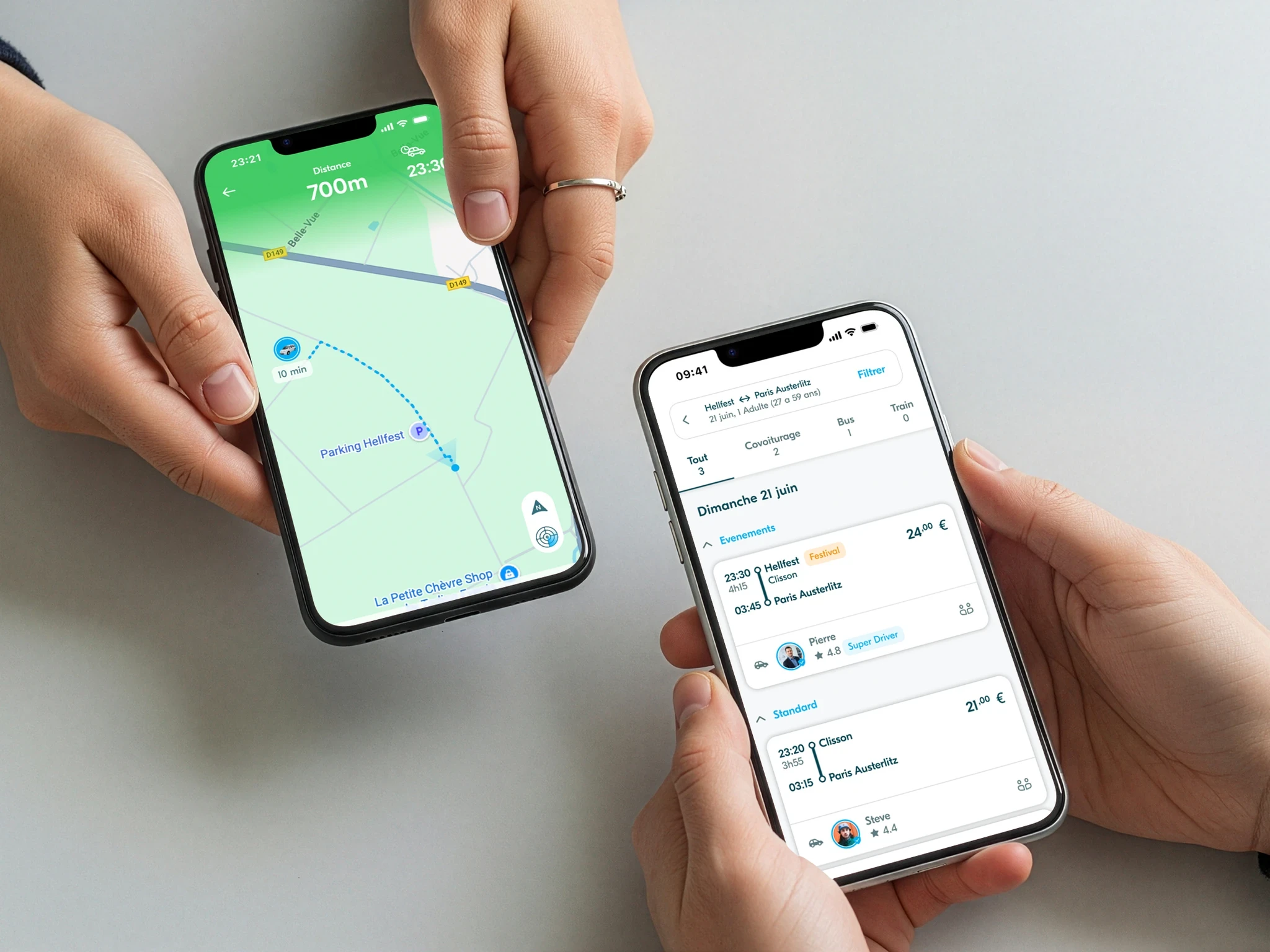
Rethinking the BlaBlaCar experience at major events, where drivers and passengers have to meet up in a crowd.
- Role
- discovery, UI design, user testing
- My part
- The planning and the ride search
- Setting
- bootcamp project, The Design Crew
- Team
- 3 product designers
- Deliverable
- mockups, tested prototype
- Duration
- 2 weeks
- Methods
- 5 user tests
Framing
How can we help drivers and passengers find each other in the crowd at a major event?
Meeting up as a group, in a crowd
With no access to the field, the project starts from hypotheses stated explicitly, then checked against user tests.
The ride is not the problem: the last fifty metres are. At a festival or a match, these last few metres become the most uncertain moment of the journey.
- A ride to an event is not like any other rideIt involves several people who do not know each other
- Without a shared visual cue, the group splits up on arrivalThe uncertainty comes from the crowd, not from the ride
- Coordinating before departure reduces stress on siteTrust is built beforehand, not at the moment of meeting up
- A meeting point set by the appRigid: a place chosen in advance does not survive a crowd on the moveDropped
- A phone call started from the rideNoisy and intrusive: unusable in the very situation the problem comes fromDropped
- An event tag on the rideBuilds on the existing search, with no new flow to learnKept
- Shared location and a visual signal on siteHelps people spot each other without assuming the group members know one anotherKept
Design
The app offers cues; it does not choose the place
Event tag, ride group and radar
The event tag is added to the existing search, the group is created at booking and the radar is used on site. Everything stays within the BlaBlaCar design system.
- Build on what existsEach feature is added to an existing flow, never alongside it.
- No new componentThe tag, the group and the map rely on elements the app already has.
Plan
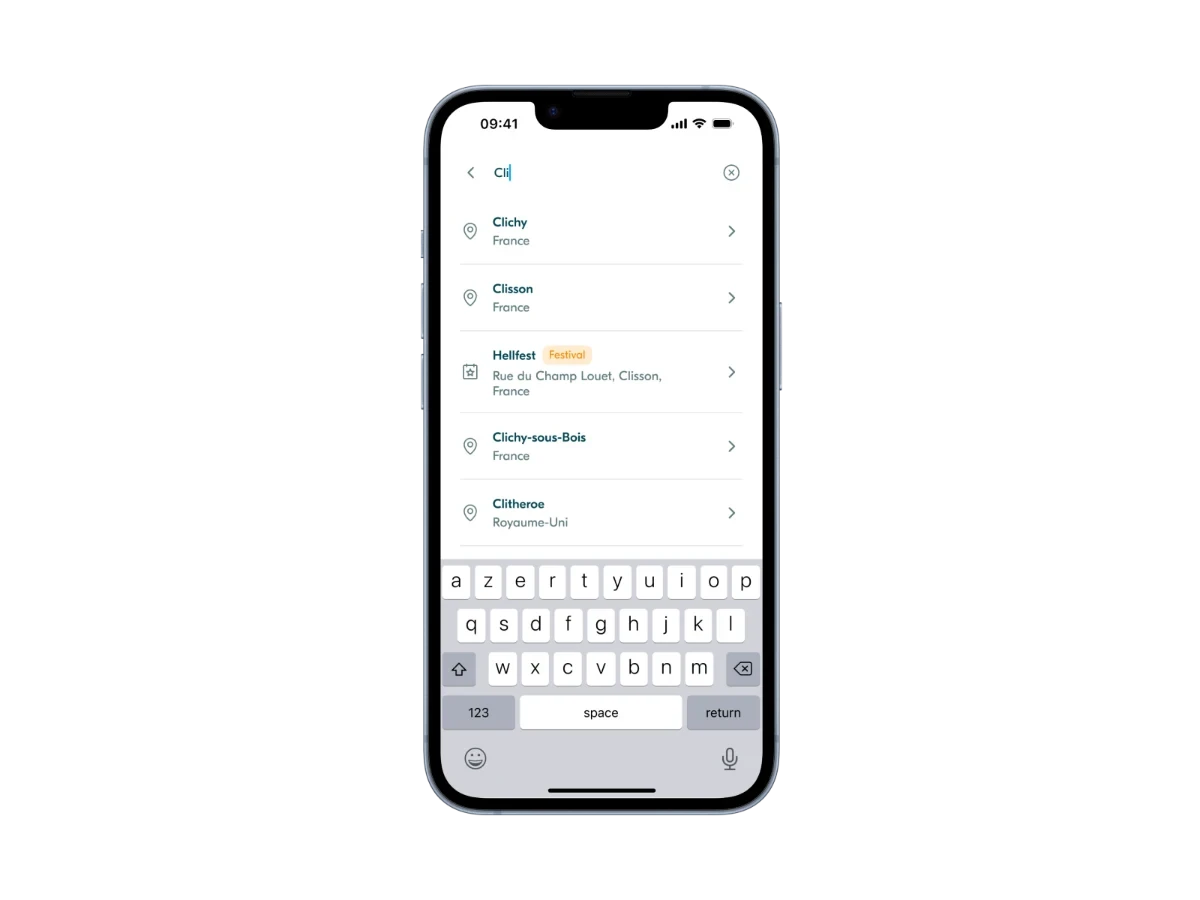 Search resultsThe tag flags the ride
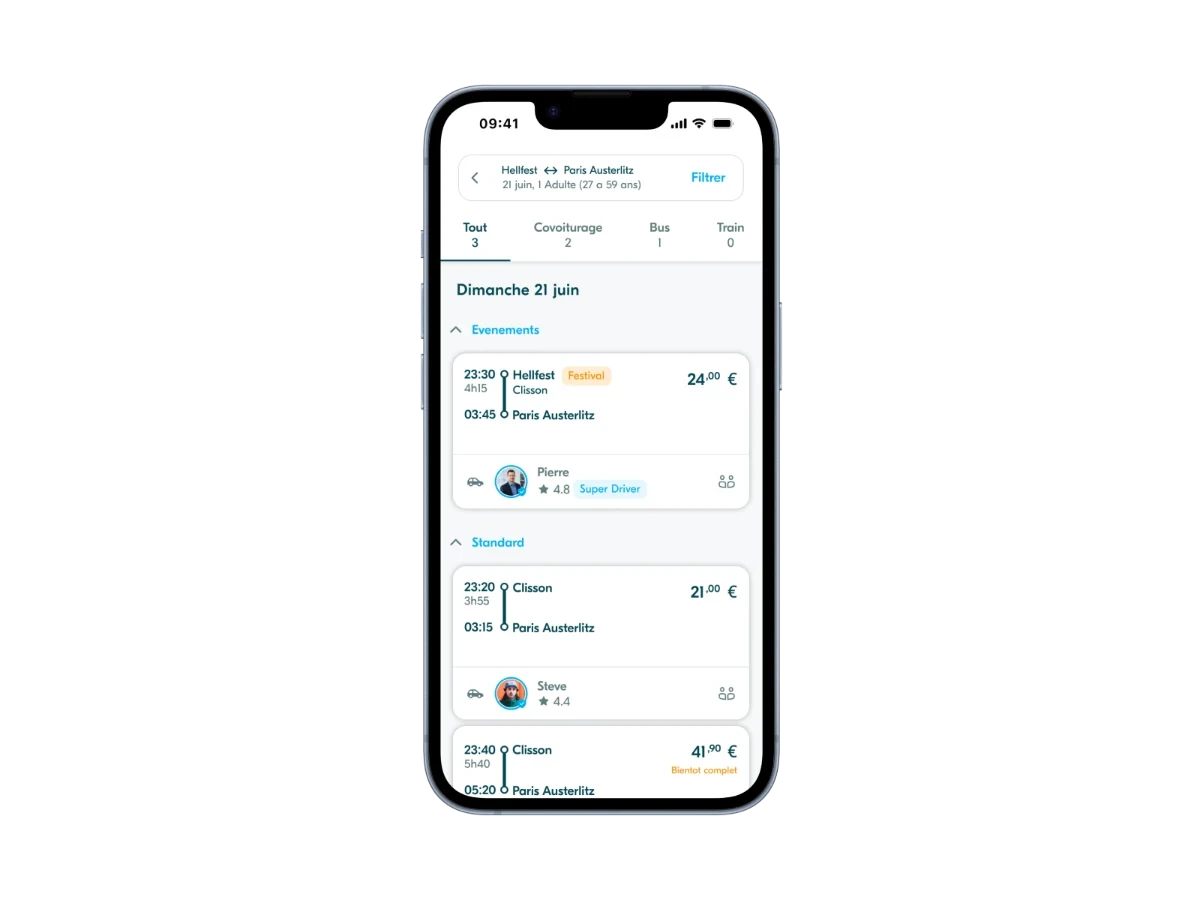 Filter by eventThe list narrows down
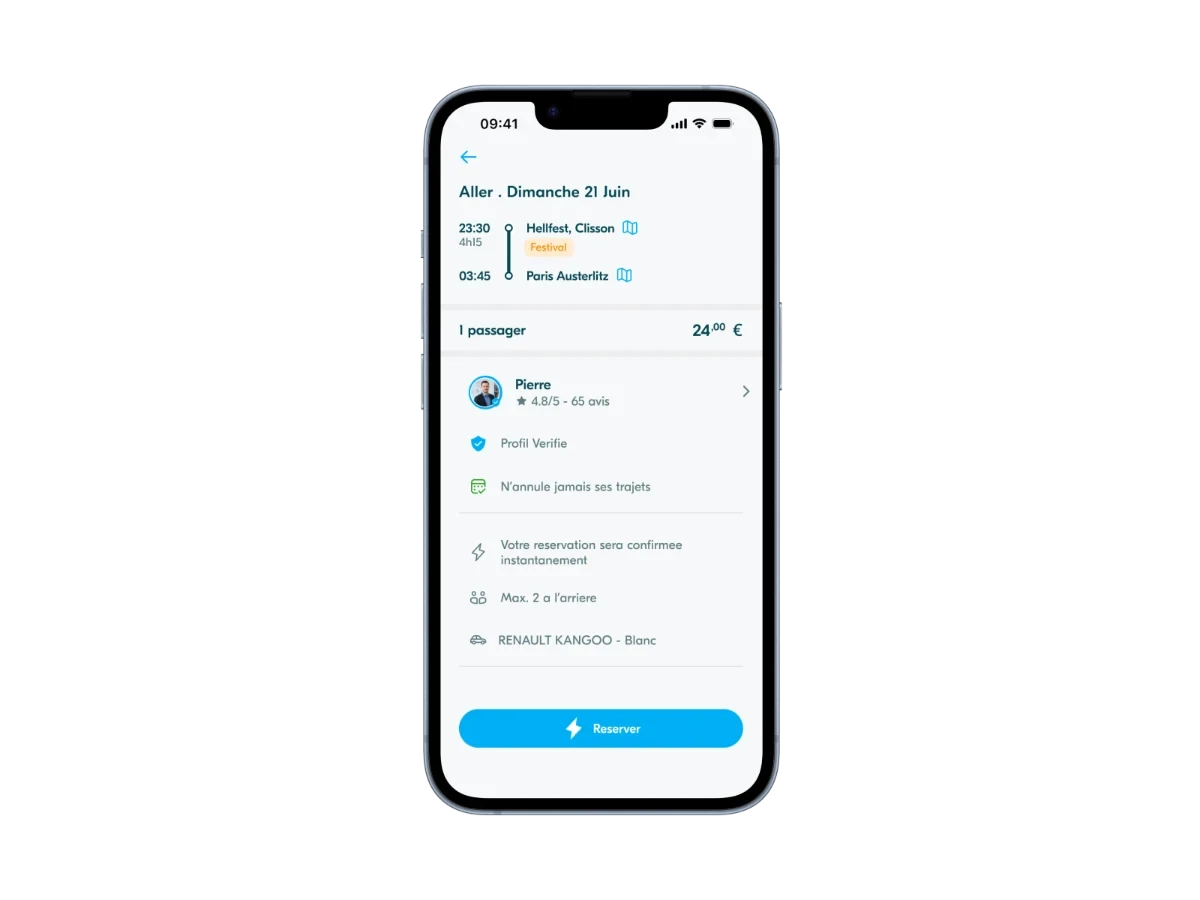 Ride detailsThe event information
Organise
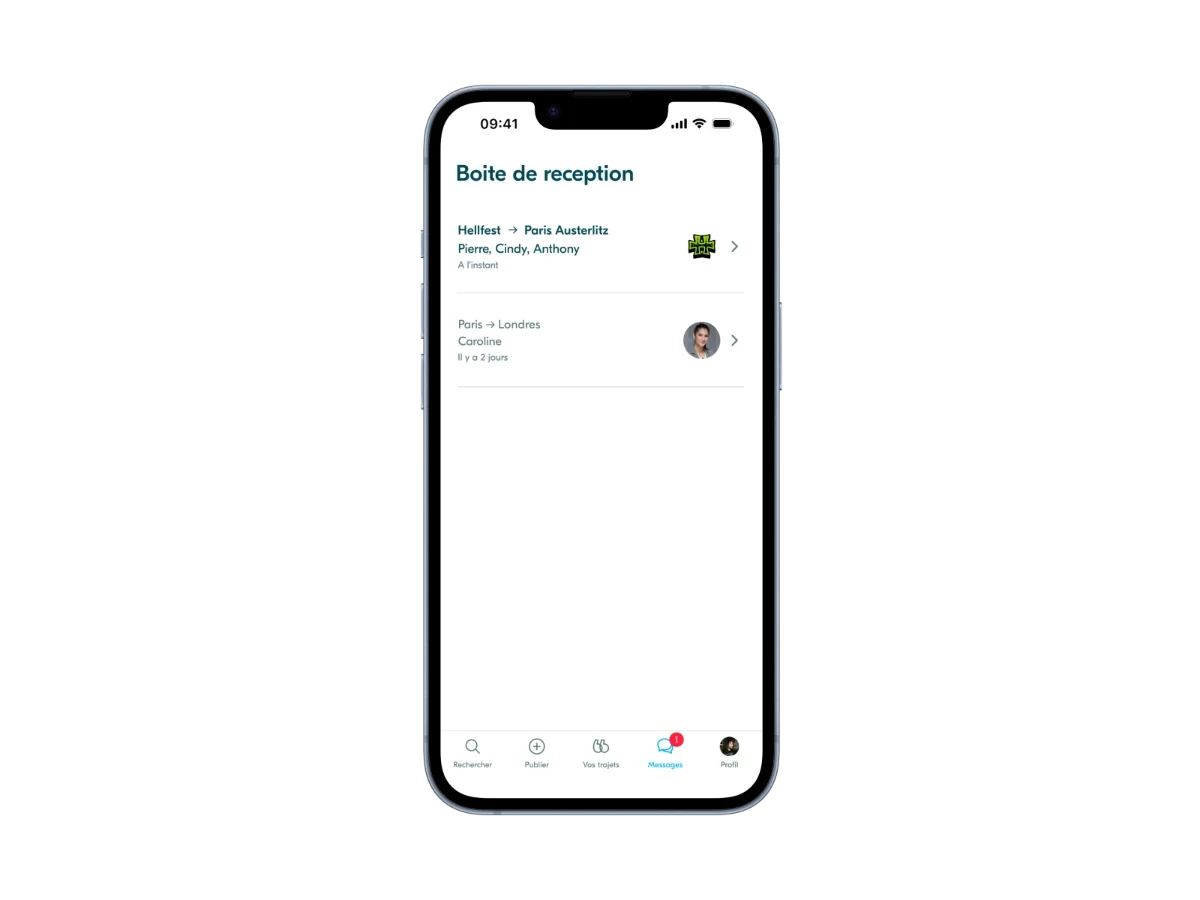 Ride groupCreated at booking
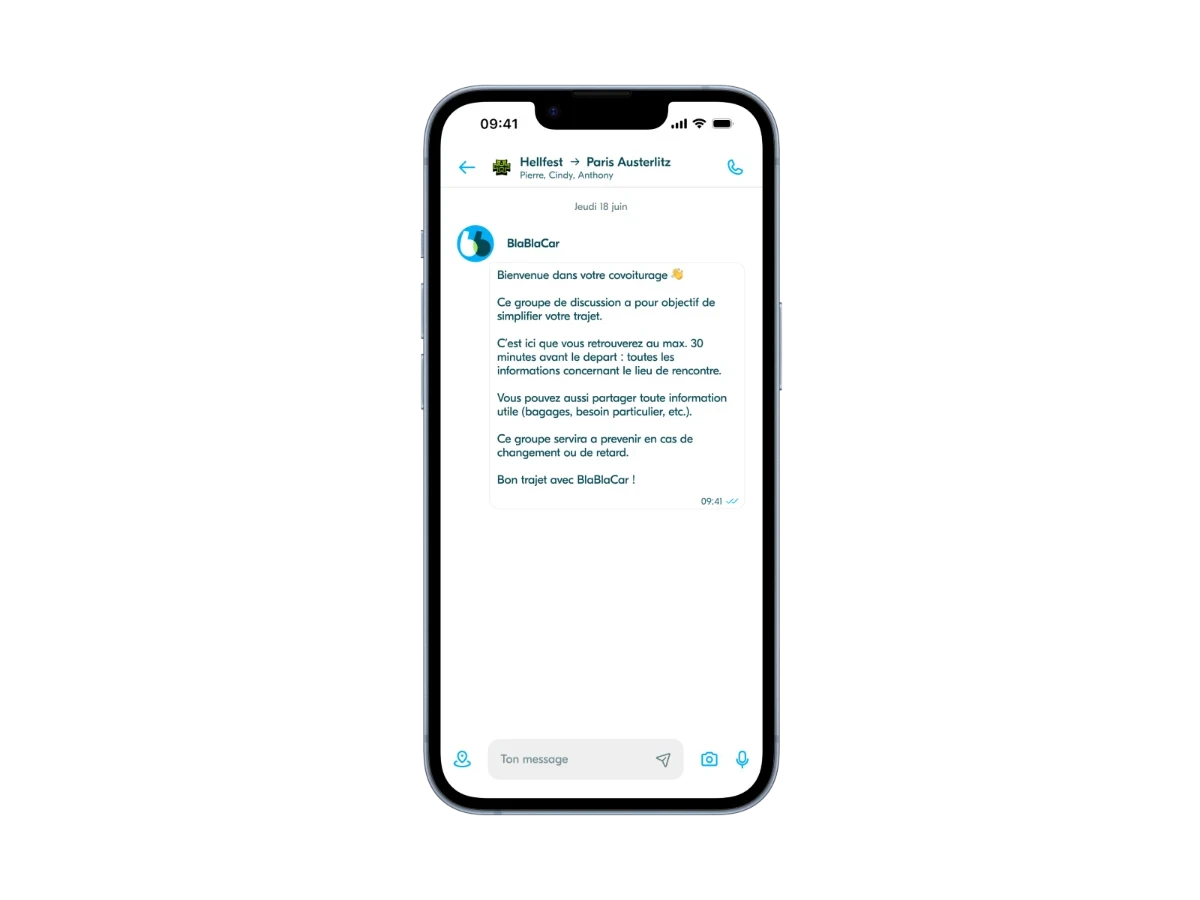 MessagesBefore departure
Sync up
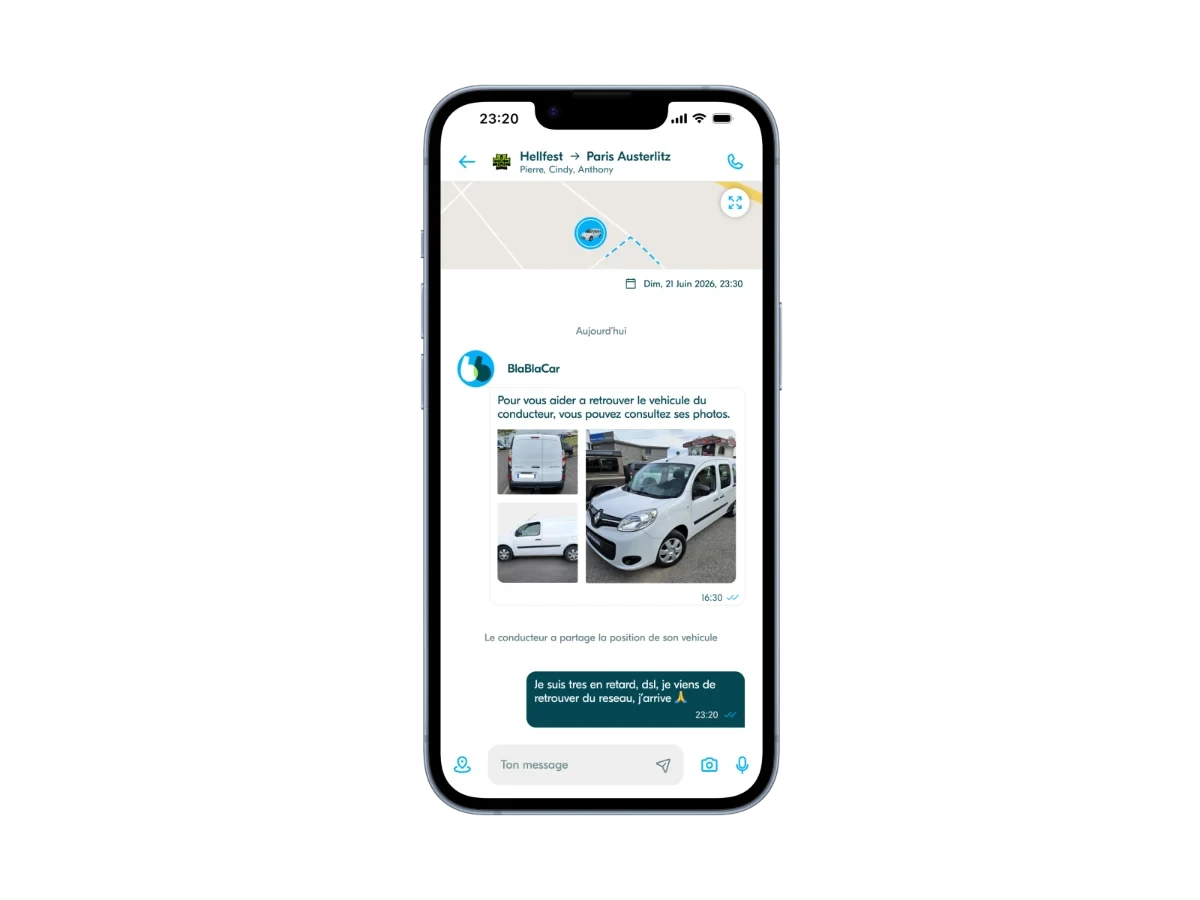 Photo of the vehicleShared by the driver
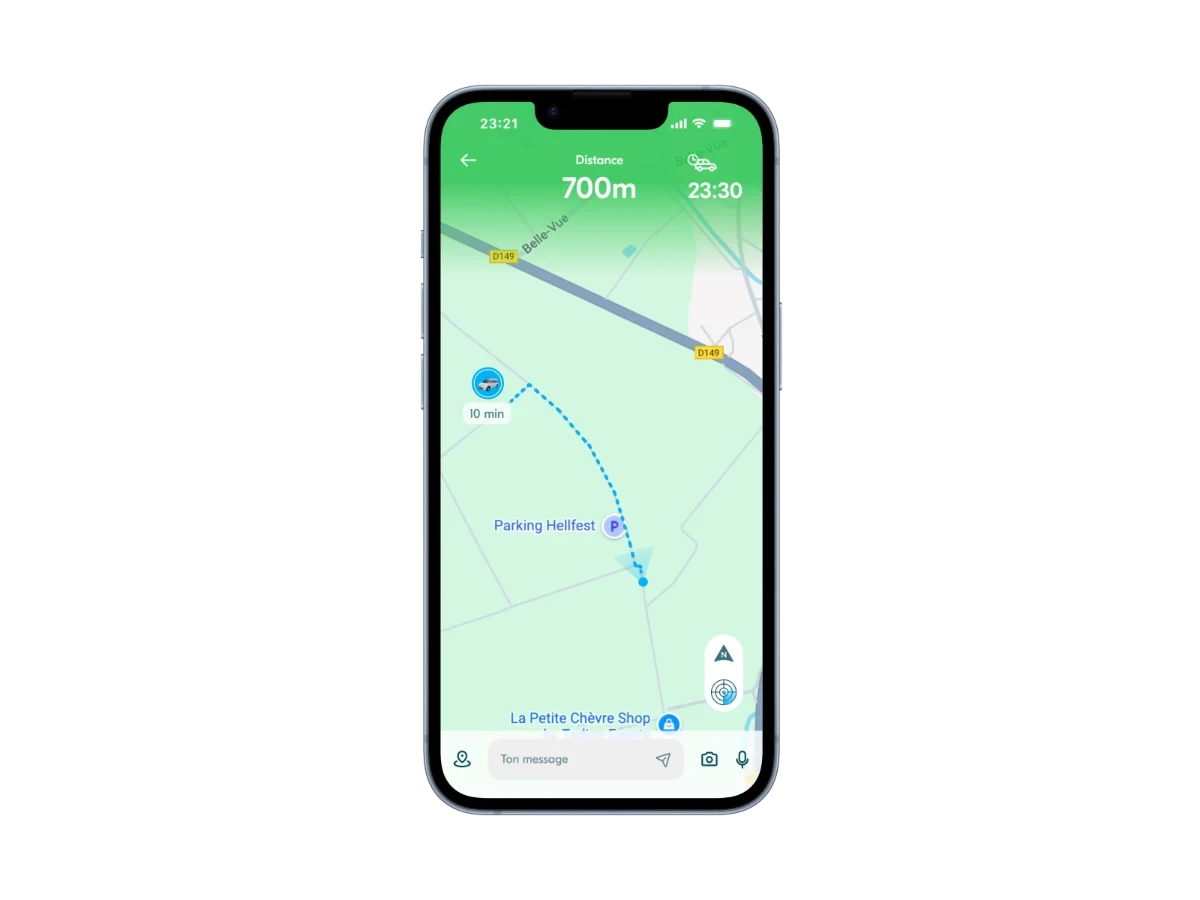 Real-time mapEveryone’s location
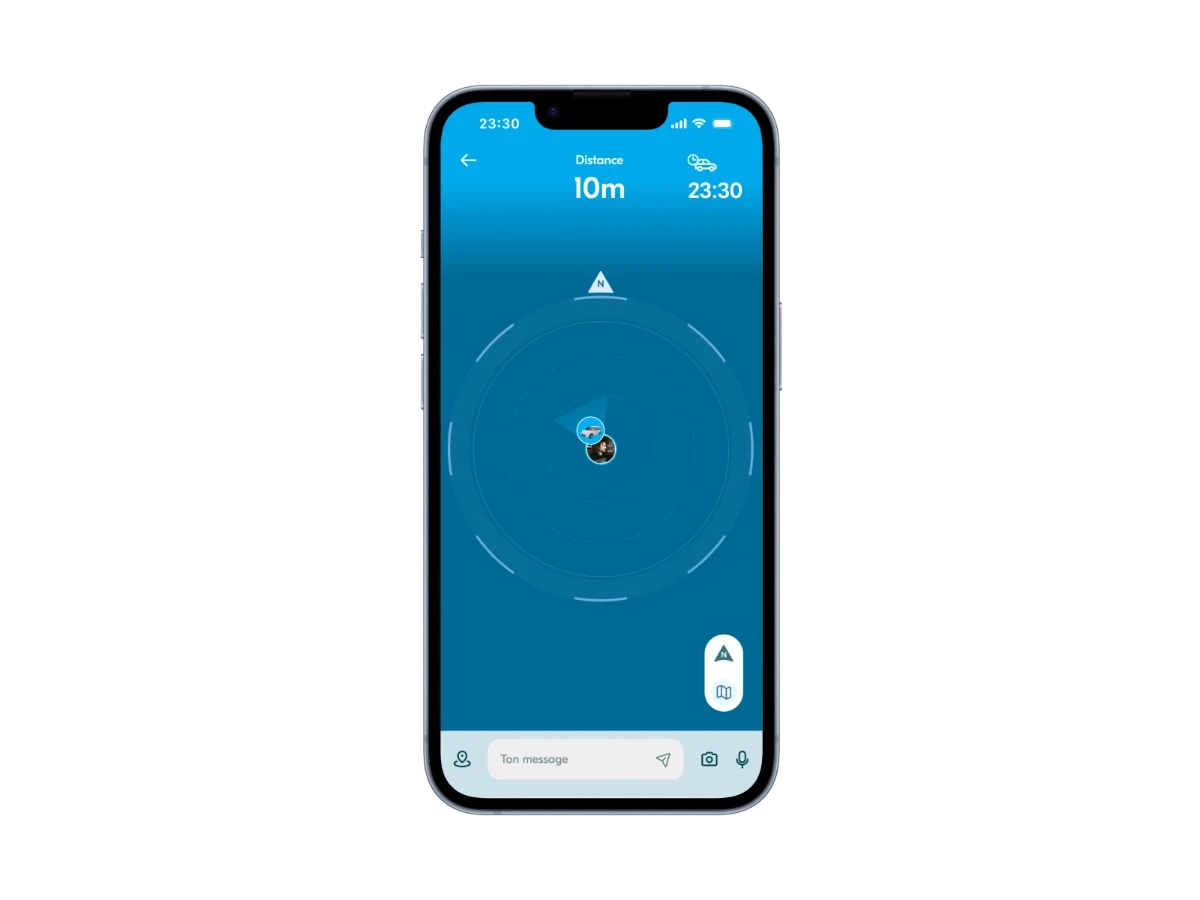 RadarSpotting each other in the crowd
User testing
3/5 read “Refresh” where it was a radar
Five sessions on an interactive prototype. Each feature is tested against a hypothesis written in advance: it is the only way to close the loop when you start without field research.
| Hypothesis | Result | Follow-up |
|---|---|---|
| A ride to an event is not like any other rideEvent/standard classificationPartly | 3/5 saw and used the classification | To clarify: the affordance of the tags. |
| Without a shared visual cue, the group splits up on arrivalRelevance of the RadarPartly | 2/5 identified the radar, 3/5 read “Refresh” in it | Icon redesigned, animation removed. |
| Coordinating before departure reduces stress on siteMessaging built into the mapNot assessed | The test scenario did not naturally lead to the messaging | Not fixed: to be repositioned in the next iteration. |
3/5 saw and used the classification
To clarify: the affordance of the tags.
3/5 read “Refresh”
The icon and its animation suggested a reload. Icon redesigned, animation removed.
Retrospective
Method stood in for field research: hypotheses stated, then settled
- State rather than assertWithout field research, writing our bets down in black and white was the only way to be able to question them.
Writing a test scenario that could not prove the hypothesis
None of the five testers opened the messaging, not because it is useless, but because nothing in the flow created a need to communicate. It was not the hypothesis that failed, it was the test.
- Rebuild the scenario around something going wrong on the rideA delay, a change of location: without an incident, there is no need
- Reposition the entry point to the messagingIt does not appear at the moment the need arises
- Check that the new radar icon can be read without help
Contact
martial-deleplanque@hotmail.fr